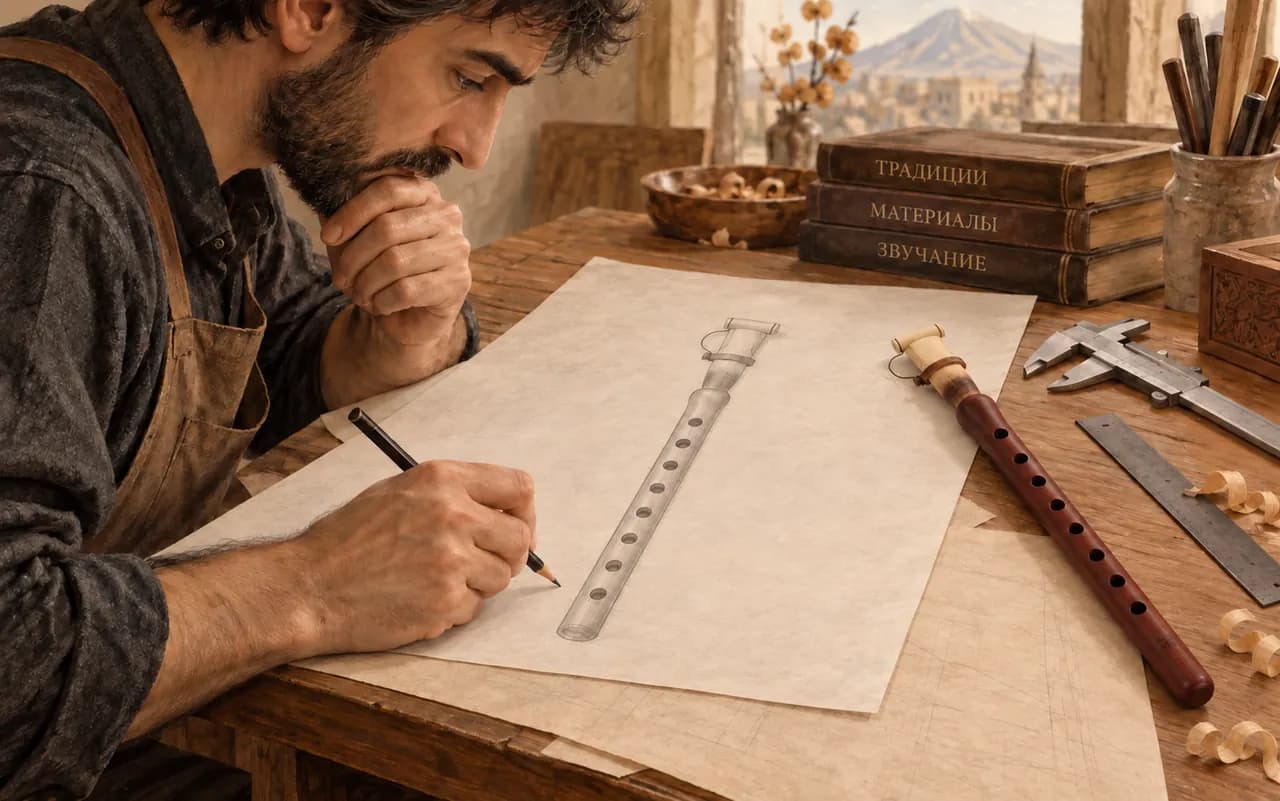
A comparative analysis of duduk-making technologies in Armenia and the neighbouring republics of Transcaucasia reveals the difference between artisanal and standardised production. The pitch and sound of the instrument largely depend on the master's approach.
Questions of standardisation
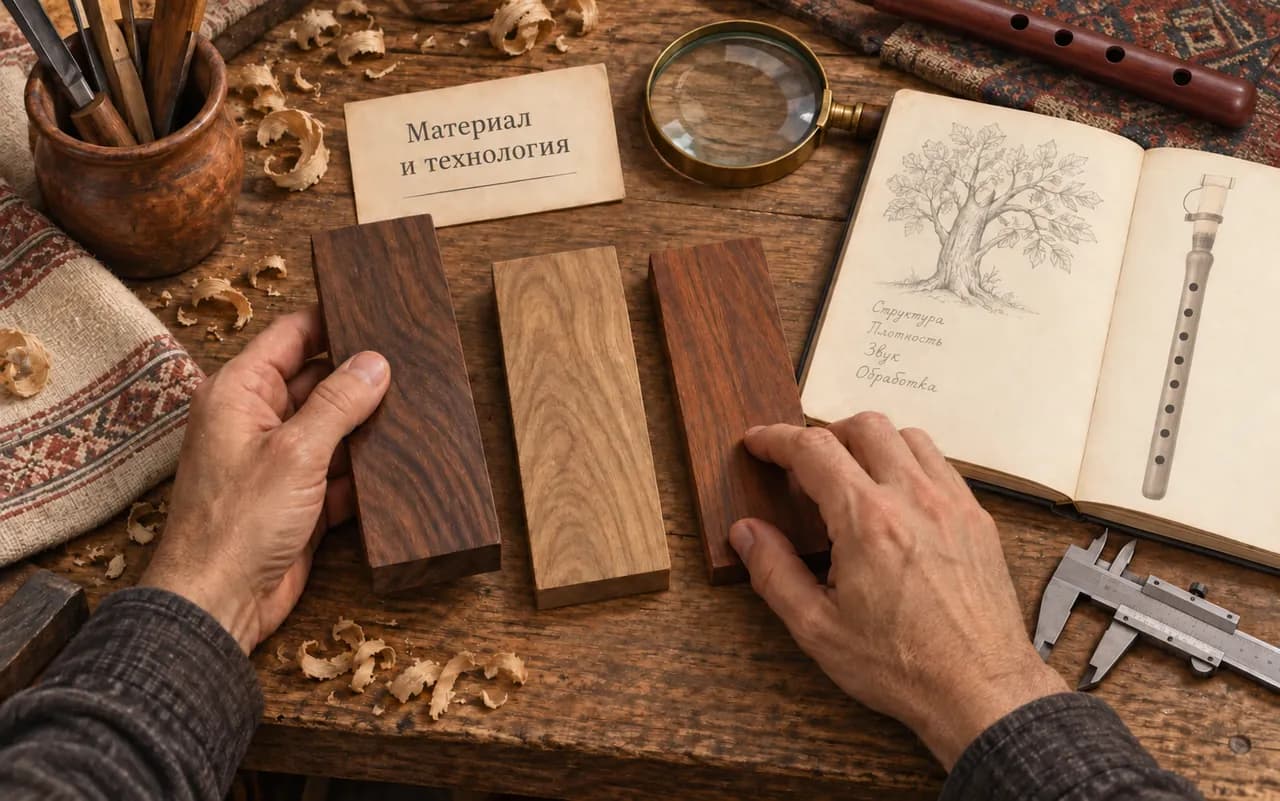
In Georgia and Azerbaijan there is no unified system of standards. The Armenian tradition uses exclusively apricot wood, whereas the neighbouring republics use mulberry, walnut and dogwood — and this significantly affects the instrument's timbre. The mouthpiece also differs: in the Georgian-Azerbaijani versions it is narrower and longer, which complicates the selection of the resonator and the tuning.
Technical differences
The number of finger holes also varies: the Armenian duduk has 12–14 holes, whereas the Georgian-Azerbaijani one often has fewer than ten. This is because in those regions the instrument is used mainly for folk purposes.
Methodological approaches
Enok Kocharov's school drew on Azerbaijani motifs, which is not entirely acceptable for the Armenian tradition. Georgy Minasyan's leadership offered a more comprehensive repertoire, combining Armenian and Georgian melodies.