The duduk and its music: UNESCO visits Armenia
The inscription of duduk music on the UNESCO heritage list, its counterparts in neighbouring countries, technical characteristics, varieties and its sound in film and world music.
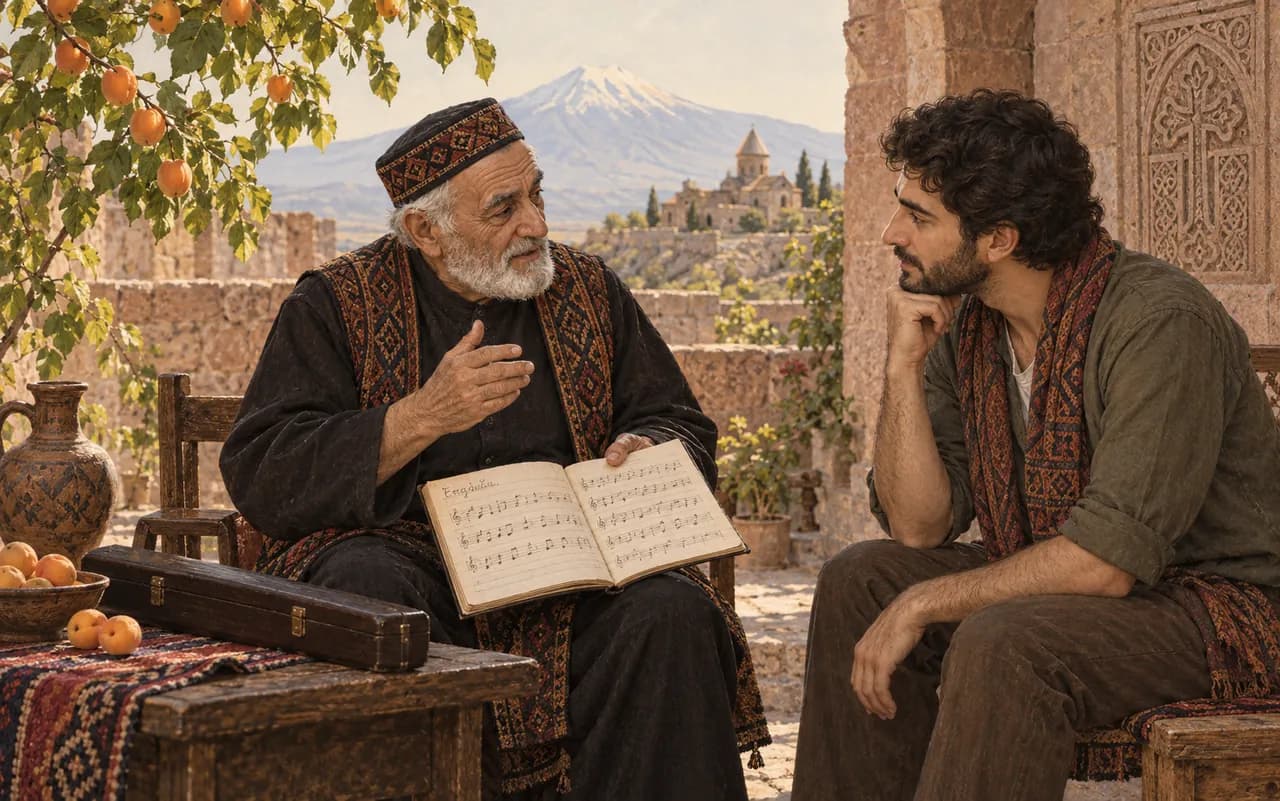
In 2005, the music of the Armenian duduk was inscribed on the "Representative List of the Intangible Cultural Heritage of Humanity".
The duduk as an instrument, and duduk music as we know them today, took shape over many centuries. They are traditionally inseparable from the social life and cultural identity of Armenians. Duduk music accompanies many events in the life of Armenian society, such as weddings, funerals, christenings and so on.
The Armenian duduk — keeper of collective folk memory
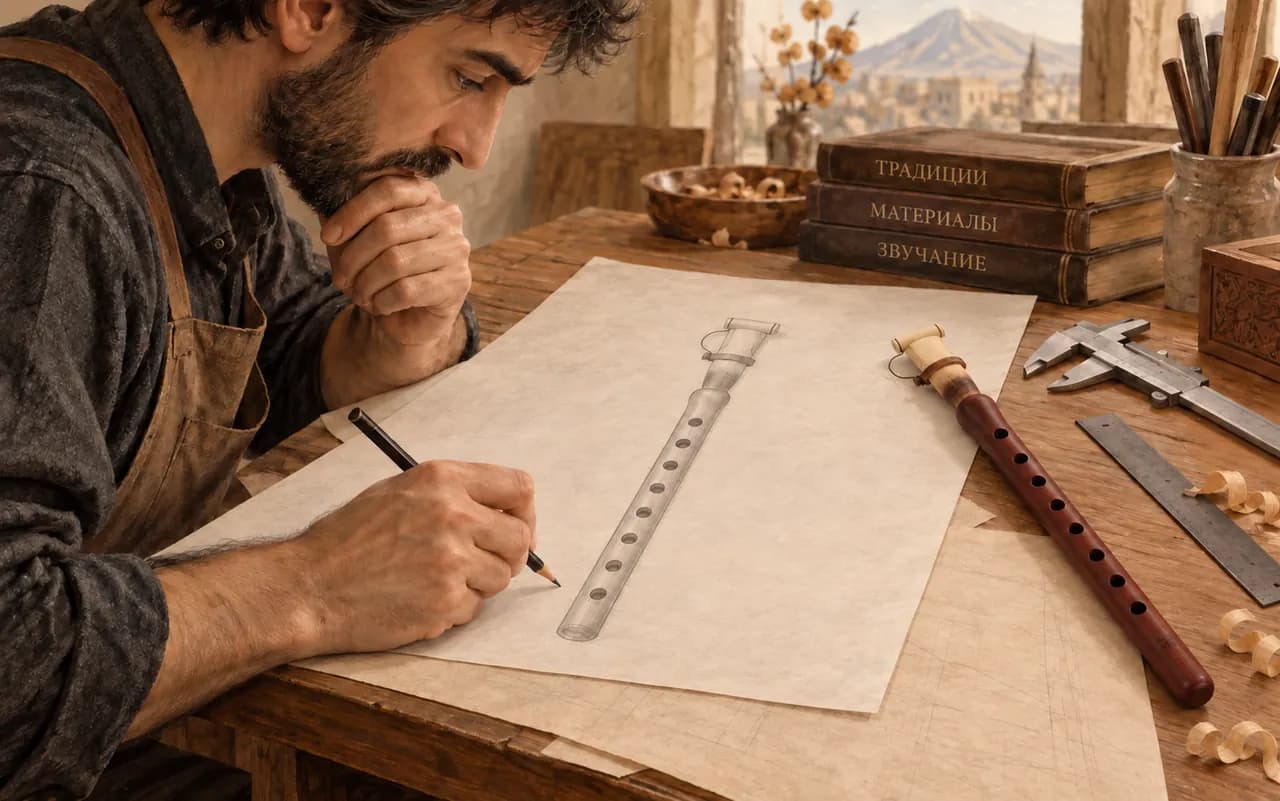
The duduk is a wooden wind instrument shaped like a cylinder, with holes drilled in two rows. It is a folk instrument made of apricot wood and very popular in many countries of the East.
It has various prototypes. For example, in Iran and Azerbaijan it is called the balaban or balaman, in Georgia the duduki, in Turkey the mey. Between the Armenian duduk and its counterparts there are both similarities and differences.
The Armenian name of the instrument is duduk, or tsiranapogh (a pipe made of apricot wood). It's worth noting that in Latin the apricot is called "ARMENIACA" — the "Armenian fruit".
Armenian musicians use a special technique to make the duduk's sound resemble the human voice. The instrument's sound reflects the very feelings of Armenians, the soul of the country and of Armenian history.
It seems as though this instrument arose and developed together with the Armenians. There is a very common saying that the duduk is "the most Armenian of all musical instruments". The sound of the duduk, like its forms, was created over centuries, absorbing the collective memory and character of the people.
The duduk holds a special place in the family of folk wind instruments. Feeling and soul are conveyed by the musician who plays it. The audience is enchanted by the skill of the performer conveying the instrument's soft timbre and the sensitivity of its sounds.
The birthplace of its inimitable sound is under the player's fingers and in the depths of their heart. The duduk and instruments like it have been widespread throughout the world since ancient times.
Technical characteristics of the instrument
The instrument is 28–40 cm long. The most common type, called the "A duduk", is 35.5 cm long with an outer diameter of 2.2 cm. The inner diameter is constant — 1.2 cm — widening only slightly at the end to accommodate the hole/reed. The profile of this part is very important for achieving the desired sound quality.
The reed, known as the ghamish, is 10.5 cm long and flattened at the end, near the point of attachment.
Varieties of the duduk
At present there are seven varieties of duduk: G, A, B, H, C, D, E, F. Each of these is the German note name when the finger holes are open. An A duduk can be made to play any fundamental tone, from sharp F to natural B.
The sound of each type has certain differences. For example, the sound produced by the A duduk is better suited to love songs, and the D duduk to dances.
Notable works featuring the duduk
The sound of the duduk is also used in the film "The Color of Pomegranates" by one of the greatest directors of the 20th century, Sergei Parajanov.
The first professional attempt to use the duduk (combined with another national instrument, the zurna) in classical contemporary music was made in 1975 by the Armenian composer Avet Terteryan (1929–1995) in his Third Symphony, performed by a symphony orchestra.
The duduk was also taken up by the great cellist of our time Yo-Yo Ma and the Silk Road Project to convey the sounds of Armenia. Yo-Yo Ma chose the duduk player Gevorg Dabagyan and the composer Vache Sharafyan as representatives of Armenia to reveal the sounds and soul of the Armenian duduk to the whole world.
Beginning in 2001, several of Vache Sharafyan's works were presented:
- "Sun, Wine and the Wind of Time" (for duduk, violin, cello and piano);
- "The Morning Scent of the Acacia's Song" (for duduk and string quartet);
- a version for duduk, soprano and string quartet (published by G. Schirmer).
They were presented by the duduk player Gevorg Dabagyan, the cellist Yo-Yo Ma and the Silk Road Project ensemble:
- in Cologne, the Brussels Philharmonic, the Amsterdam Concertgebouw;
- in the USA at Carnegie Hall, the universities of Berkeley and Stanford, Benaroya Hall in Seattle, a Washington national park, and Chicago's Symphony Center;
- in Italy in Rome, Milan and Florence.
Concerts were also held with great success in other parts of the USA and Europe.
In addition, Sharafyan wrote the viola concerto "Surgite Gloriae" and Sinfonia 2 un poco Concertante for symphony orchestra, both featuring the duduk.
The premiere of the first work, performed by the "Moscow Soloists" under Yuri Bashmet, took place in 2007 at the "Elba Isola" music festival and in the Great Hall of the Moscow Conservatory. The premiere of the second, performed by the Boston Modern Orchestra Project at Jordan Hall (Boston), took place in 2008.
In these works Sharafyan presented a new concept of synthesising the traditional Armenian sound with Western culture.