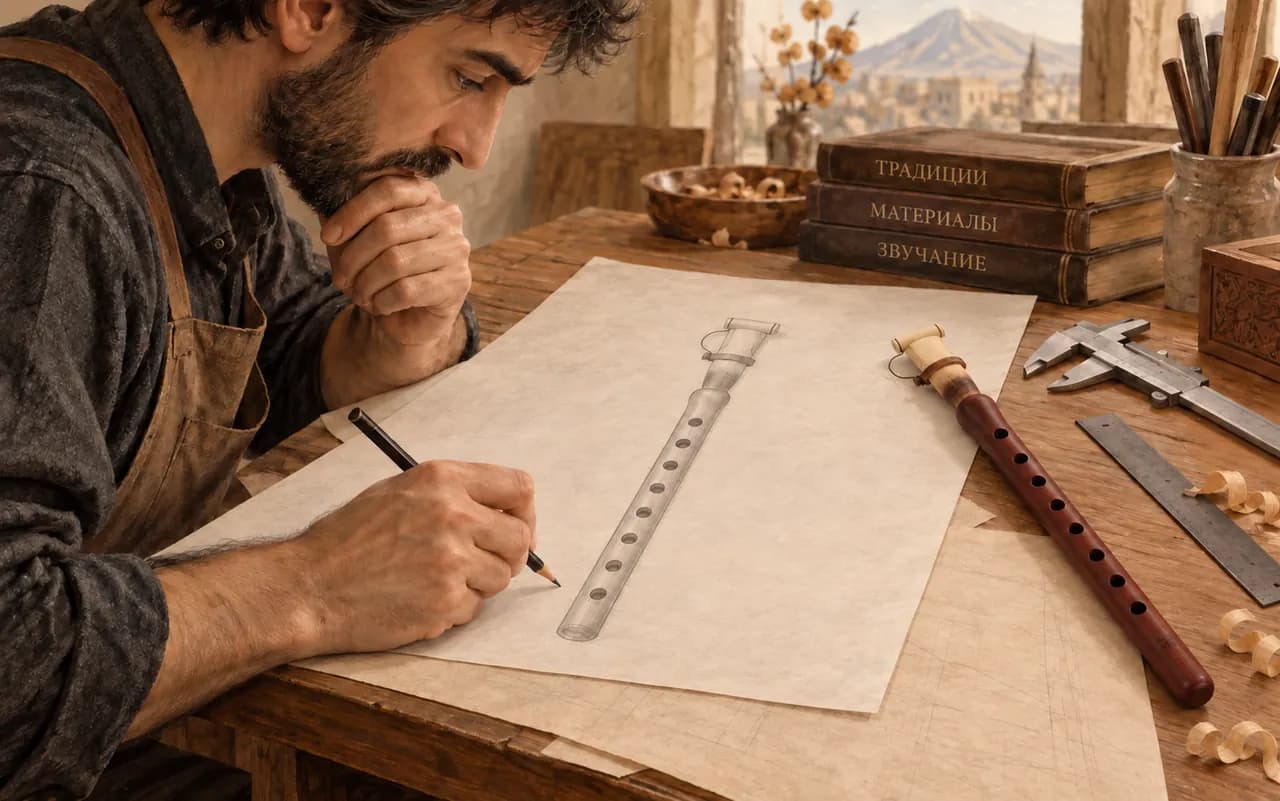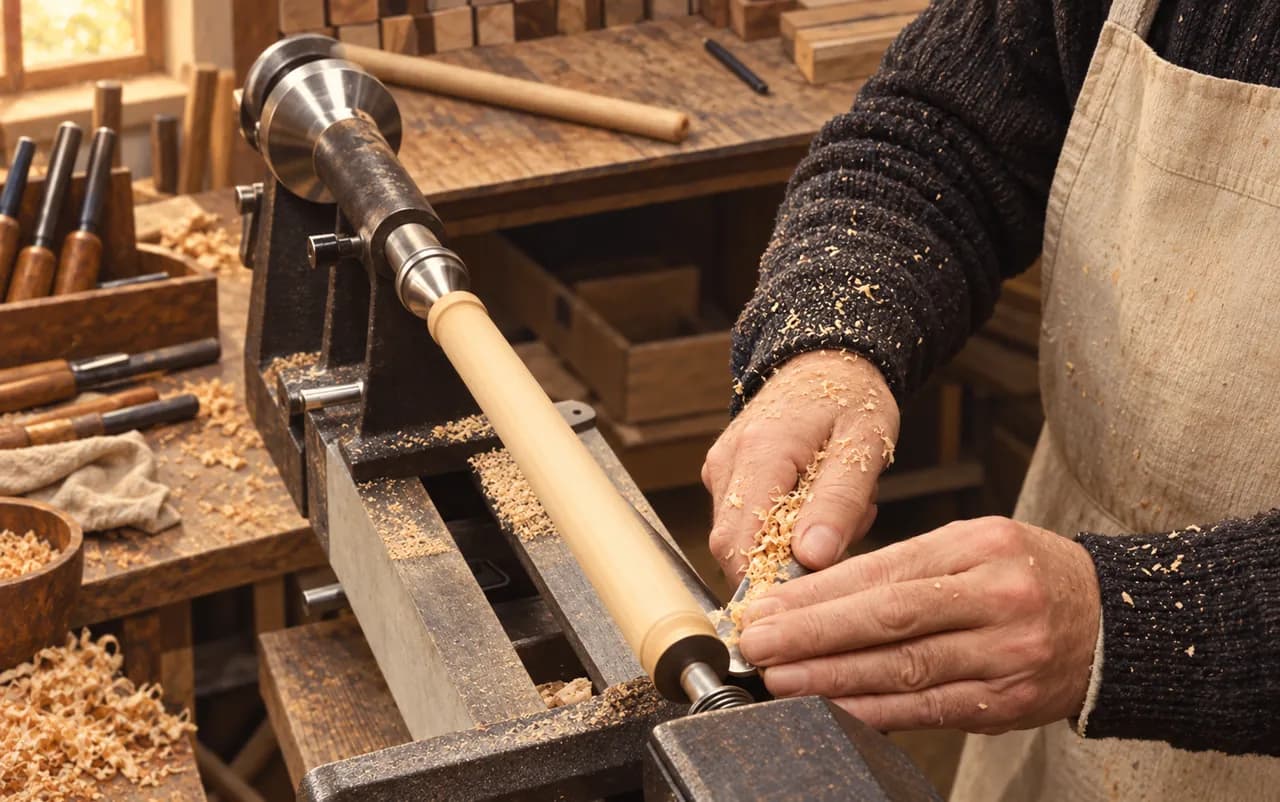
To truly understand the duduk, you need to know the elements of its construction and the traditional technology of making it.
The mouthpiece (reed)
The mouthpiece is made from Arundo donax cane. It is larger than a contrabassoon's reed, contributing to the duduk's distinctive timbre. Its profile is complex: flat at the top, cylindrical in the middle and tapering into a cone at the bottom.
Thread is wound around the mouthpiece's cone. This allows the performer to adjust how deeply the mouthpiece is inserted into the resonator, changing the depth and clarity of the sound.
The resonator (body)
The resonator is usually made from apricot wood, preferably from wild trees. Makers select wood from the western and eastern sides of the trunk, as well as the harder northern and more porous southern sides. Their roles in the duduk's construction are compared with maple and spruce plates in a violin. The selected wood is cut into blanks measuring 500 × 50 × 50 mm.
The blanks are thoroughly dried, then a hole 11–13 mm in diameter is burned or drilled through them. The blank is shaped into a cylinder, while the bore is given a conical shape widening towards the top, with both appearance and sound in mind.
The southern wood forms the side with eight playing holes; the northern side becomes the rear, with upper and lower holes. The finished resonator is treated with a strong potassium permanganate solution, dried and generously coated with vegetable oil to protect against cracks and moisture absorption.
The duduk's distinctive construction
The Armenian duduk's characteristics give its sound a tender, sometimes melancholy quality. Its closeness to the human voice opens a wide range of musical possibilities, from simple melodies to complex improvisation.
One factor behind this timbre is the surface of the resonator's air channel. Its slight roughness creates particular aerodynamic conditions inside the instrument and partial sound absorption. The resulting tone is muted and velvety, reminiscent of the human voice.