If you're holding a duduk for the first time, or just planning to buy one, the choice can seem complicated: keys, masters, reeds. In reality it's simpler than it looks. Let's go through, step by step, what to look at.
Step 1. Choose the key
A duduk's key is its pitch — the basic height of its sound. For a first instrument there are two convenient paths:
- A duduk in the key of A — the most common and "classic" pitch. Most performers play it, and the most music and teaching materials are written for it.
- A duduk in the key of G — larger in size, with a lower and softer voice. The bigger holes and comfortable finger spacing often make the very first steps easier.
If you're unsure, go for A: it's the universal choice you can't go wrong with.
Step 2. Choose a properly made, playable instrument
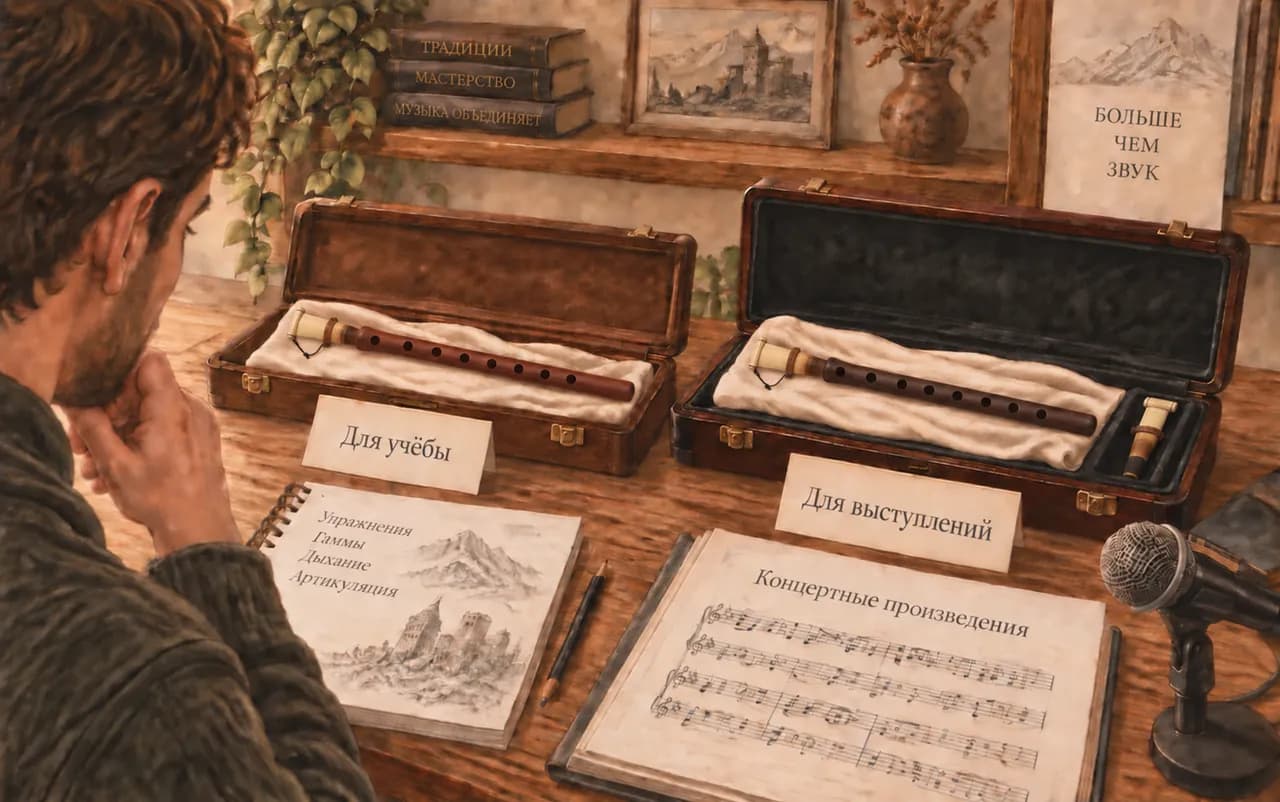
Your first lessons require a working, tuned duduk checked by a teacher or experienced player. Labels such as “student”, “professional” and “concert” do not establish quality by themselves. Poor tuning and difficult response are not acceptable just because an instrument is intended for a beginner.
A lighter reed can make starting out more manageable while your lips adapt. Read more in “The ‘student’ duduk: why beginners need a properly made instrument”.
Step 3. Check the material
A real duduk is made of apricot wood — it's precisely this that gives that warm, velvety voice. The longer the wood has been seasoned, the more stable the pitch and sound. Cheap souvenir "duduks" made of other woods sound dull and quickly go out of tune — best avoided.
Step 4. Look at what's included
A good starter set includes:
- the duduk itself;
- two reeds — the removable part that the sound depends on;
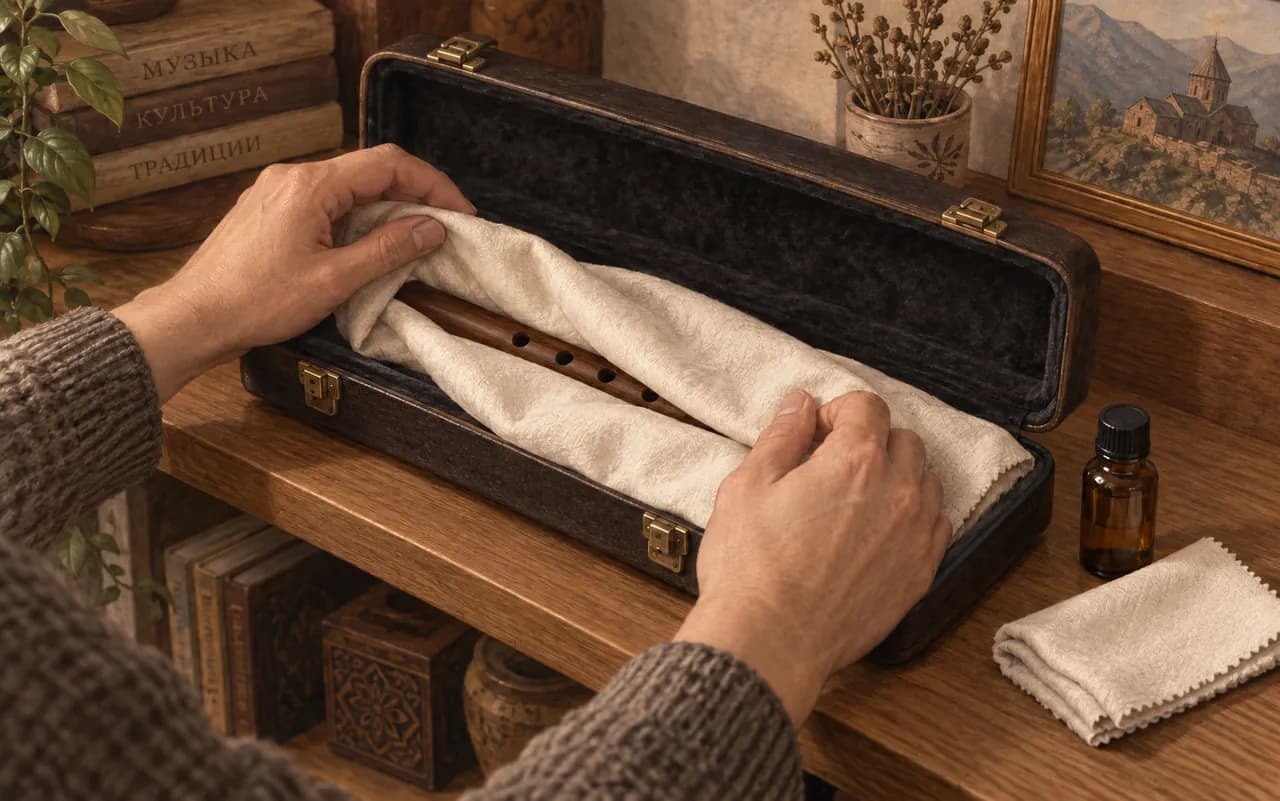
- a case;
- instructions.
A spare reed is especially important for a beginner: the reed is a consumable, and it's handy to have a second one at hand.
Step 5. Listen to the sound
The duduk is a wind instrument, and the main thing about it is its voice. Before buying, it's worth listening to how a particular instrument sounds, or at least an instrument in the same key. On the pages of our duduks we add sound recordings so you can choose "your" timbre by ear.
Need help with an instrument? Open instrument selection and tell us about your experience, preferred key and requirements. Availability, included items and terms are clarified during the consultation.