One of the most common questions from beginners is whether it's realistic at all to master the duduk if you've never played anything before. Here's an honest answer.
Getting the first sound is easy — playing beautifully takes practice
Getting a sound out of the duduk isn't hard in itself: just place the reed on your lips correctly and give it air. But an even, "singing" tone without squeaks or wobble comes with practice. That's normal for any wind instrument.
What's the hardest part
- Breathing. On the duduk the exhale is long and even. Breathing technique is taught from the very first lessons — the purity of the sound depends on it.
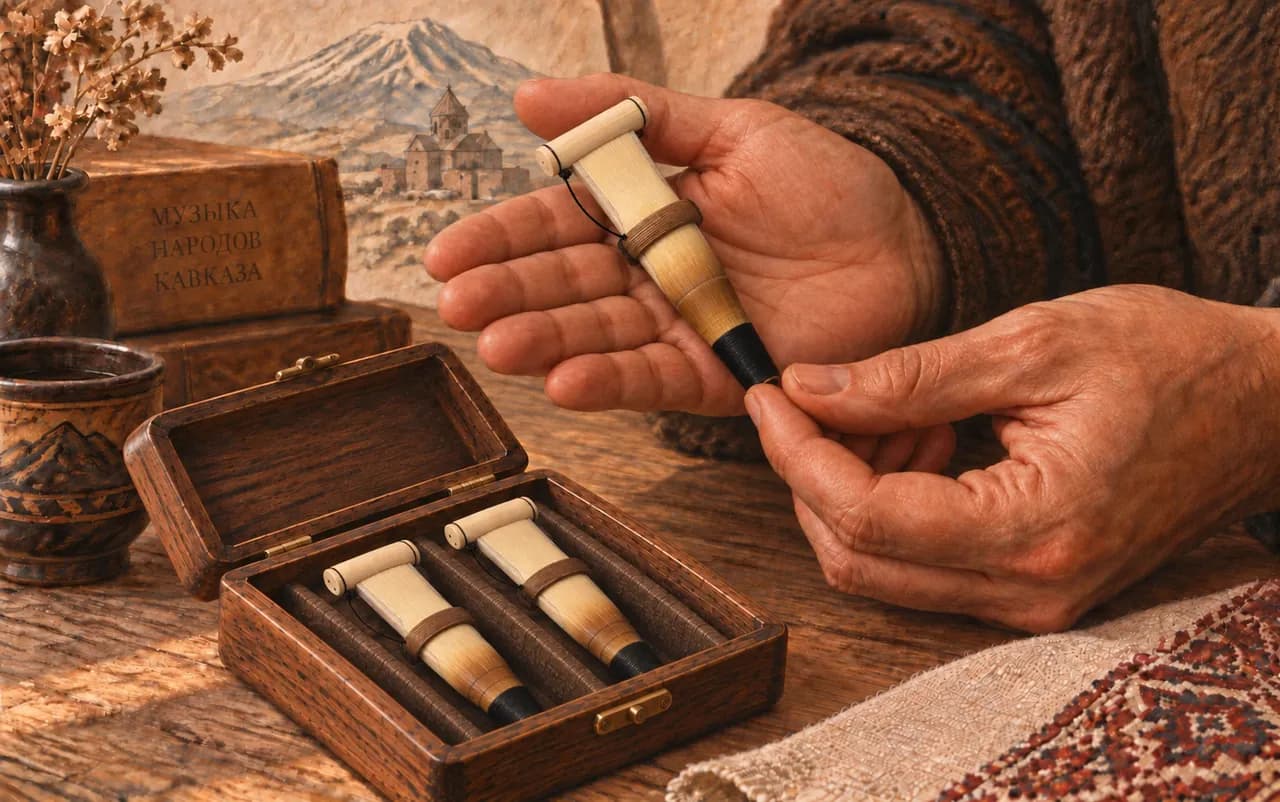
- The reed. It needs to be moistened and adjusted correctly; at first this feels unfamiliar, but it becomes a habit within a couple of weeks.
- Ear and intonation. The duduk has no keys, and the pitch of a note is adjusted with the lips and fingers — this requires an attentive ear.
How long until your first melodies
With regular practice, simple melodies come within a few weeks. A noticeable, "audible" result comes within a couple of months if you want it. Age and a musical education aren't required — we teach both adults and children from scratch.
A tip for beginners
Start with a suitable instrument (often a duduk in the key of A or G) and a few lessons with a teacher — that way you'll set your breathing faster and won't lock in mistakes.
Explore Dudukist school to learn about lessons and teaching formats. If you need an instrument, start with selection advice.