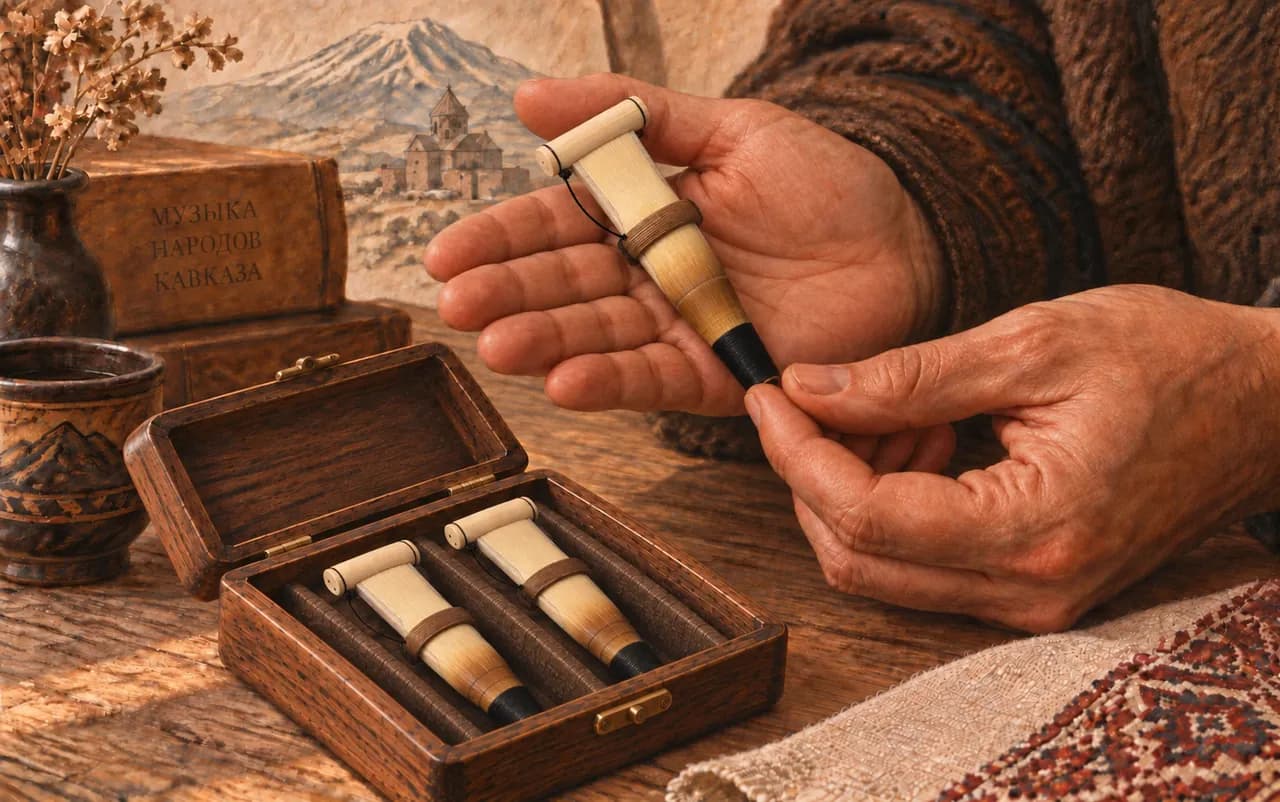
The reed (in Armenian, ghamish) is a doubled cane blade that is inserted into the duduk and makes it sound. The paradox is that it's this small reed, not the body itself, that largely determines the timbre, the ease of playing and the pitch. Let's look at how to handle it.
Why the reed matters so much
The body sets the foundation of the sound, but it's the reed that "brings the instrument to life". The same key with different reeds can sound softer or brighter, play more easily or demand more air. That's why experienced musicians choose a reed as carefully as the instrument itself.
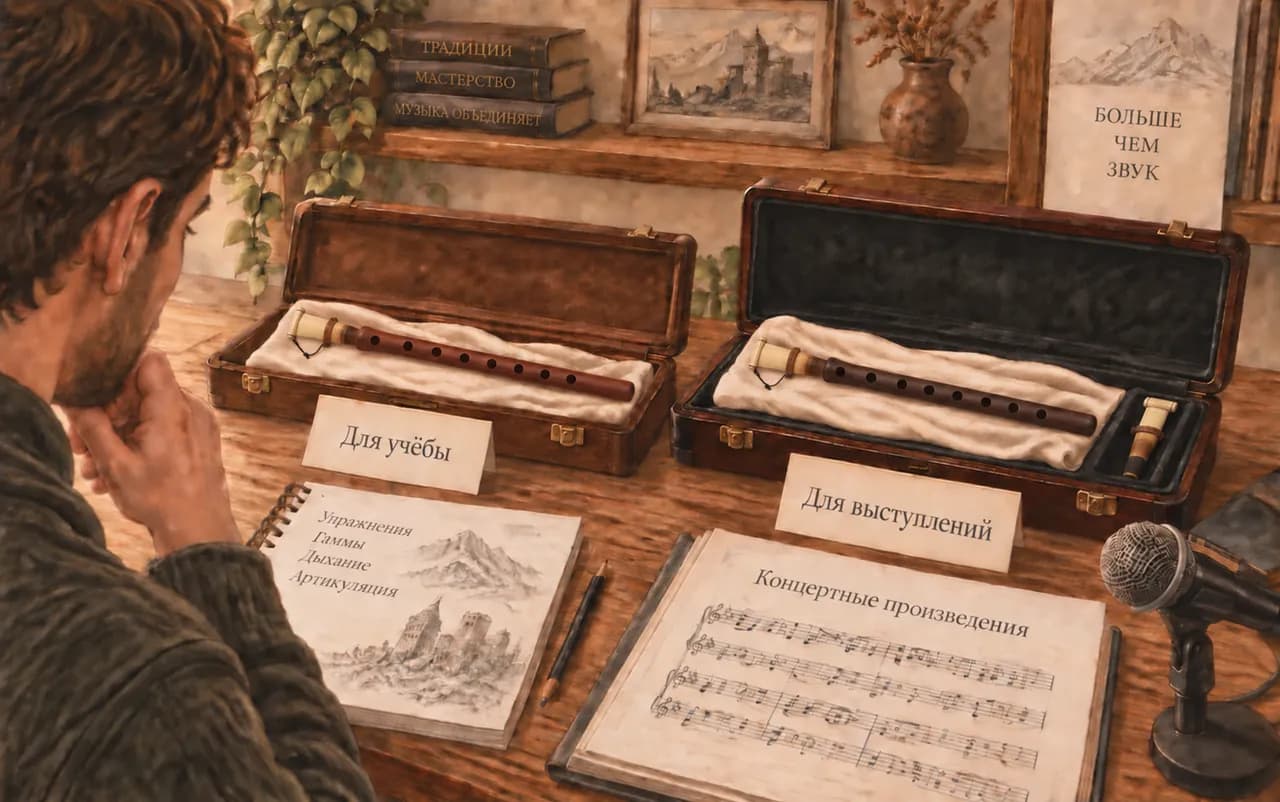
Reed hardness
Reeds vary in hardness — soft, medium and hard:
- Soft — easier to blow, simpler for a beginner, a quieter and more yielding sound.
- Medium — a universal balance.
- Hard — requires stronger, more precise breathing and gives a powerful, rich sound.
Beginners are usually more comfortable with a soft or medium reed.
How to prepare the reed for playing
- Before playing, the reed needs to be lightly moistened — dip the tip in warm water for a few seconds so the blades open up and become flexible.
- Adjust the reed's opening with the special limiter cap (usually included): by sliding it, you make the sound easier or fuller.
- Don't over-dry or over-wet it — you want just light moisture.
How to store and protect it
- Keep the reed in a protective cap or case so the thin blades aren't damaged.
- Protect it from knocks, strong heat and direct sunlight.
- After playing, let the reed dry naturally.
- Remember: the reed is a consumable. Over time it "tires" and sounds worse — that's normal, you simply replace it.
How long a reed lasts
The lifespan depends on how much you play and how you care for it, but sooner or later any reed needs replacing. So it's useful to always have a spare — which is why a good duduk set includes two reeds.
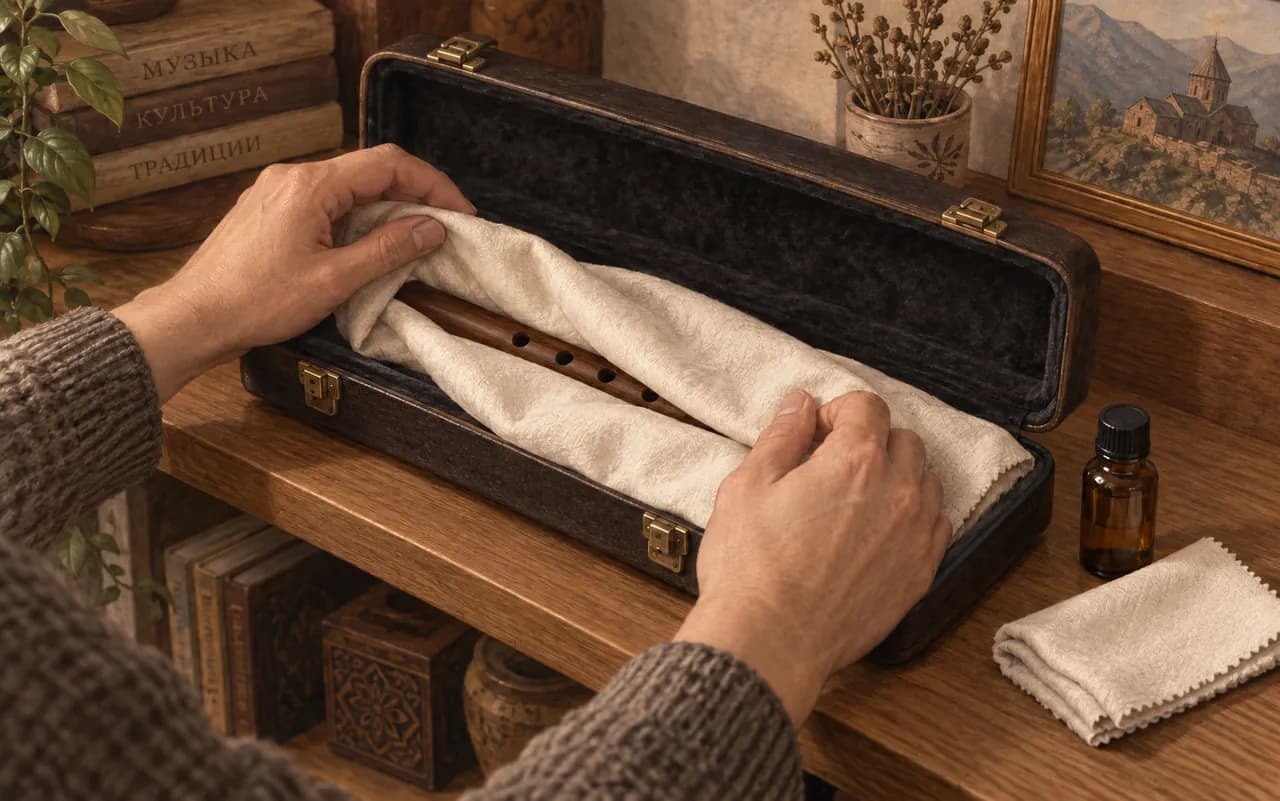
The reed is one half of caring for the instrument. The other half is the body itself — how to store it, when to oil it and what never to do, which we cover in How to Care for Your Duduk.
Need help with an instrument? Open instrument selection and tell us about your experience, preferred key and requirements. Availability, included items and terms are clarified during the consultation.