How to Care for Your Duduk: Storage, Oil and Common Mistakes
The duduk is living apricot wood, and good care decides how long it lasts. How to store it, when to oil it, what you should never do, and how to protect the instrument from cracks.
The duduk is made of living apricot wood, and it sings thanks to a fragile cane reed. Both need attention: a couple of simple habits, and the instrument will reward you with a clear, warm voice for many years. Let's go step by step — what to do after playing, how to store it, and which mistakes to avoid.
After every session
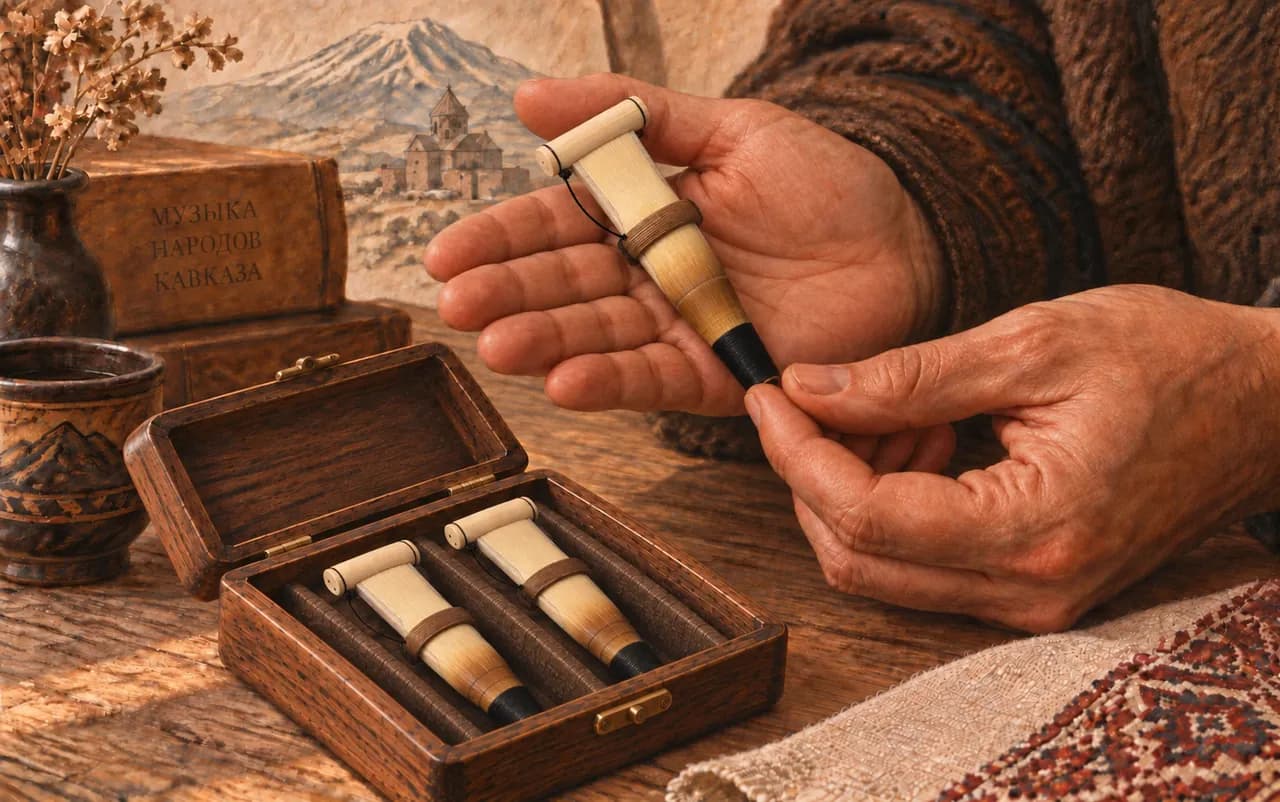
- Take the reed out. This is the first and most important rule. Remove the reed from the mouthpiece after each session — this lets the body air out, and keeps the reed itself (the most fragile part of the instrument) from warping or breaking inside the case. For more on reed care, see our separate guide to the duduk reed.
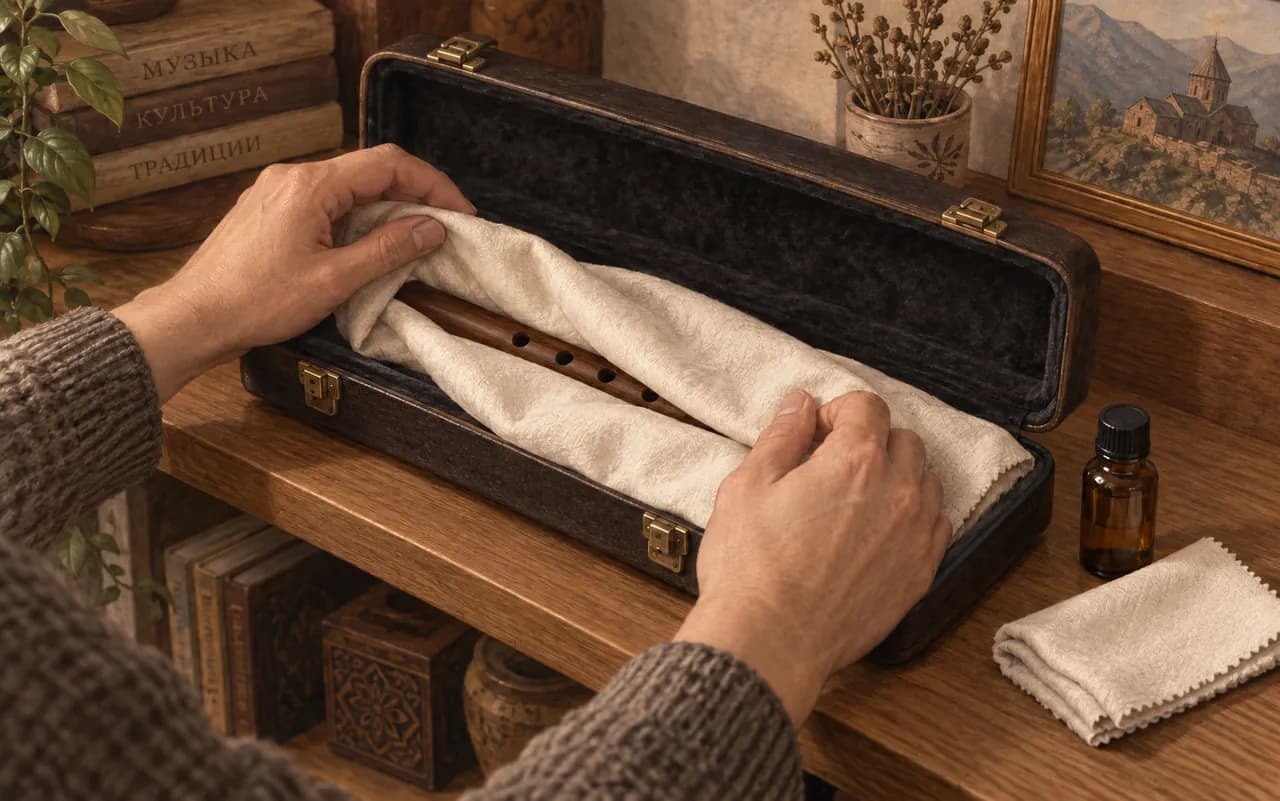
- Wipe the body on the outside. Playing leaves moisture from your breath inside. On the outside, a soft dry cloth is enough. Reaching inside, however, is a mistake — more on that below.
- Let it dry. Before putting the duduk back in its case, leave it out for a few minutes at room temperature.
How to store it
Wood dislikes sudden changes — and those, not time, are what usually ruin an instrument.
- Keep the duduk in a case or soft pouch, in a dry place.
- Protect it from direct sun, radiators and heaters — dry heat can crack the wood.
- Avoid sharp swings in humidity and temperature. Bringing the instrument in from the cold? Give it half an hour to "settle" into the room before playing.
- Don't leave the duduk in a car, on a windowsill, or by an open window in winter.
Oil: when and which
Apricot wood benefits from an occasional feed of oil — it guards against drying out and cracking, and preserves the sound.
- Use a light plant oil — walnut or almond.
- Apply a thin layer on the outside only, with a soft cloth, and let it soak in.
- Frequency depends on climate: in a dry one, about once every 1–1.5 months; in a humid one, less often, once every 2–3 months.
Over time the wood naturally darkens a little — from the warmth of your hands and the moisture of your breath. This is normal, and even beautiful: the instrument gains character.
What you should never do
- ❌ Don't clean the bore from the inside with cloth, brush or oil. The inner surface is tuned by the maker by hand — any interference spoils both the sound and the tuning.
- ❌ Don't over-wet it. The duduk is not a clarinet; there's no need to flood it with water.
- ❌ Don't dry it by a fire or on a radiator to "speed things up" — that's exactly how cracks appear.
- ❌ Don't store the reed left in place on the instrument.
If the duduk goes out of tune or cracks
Minor tuning drift is usually cured through the reed — its opening and the position of the adjusting ring (see our article on the reed). But if a crack appears or the tuning drifts seriously, don't try to fix it yourself — show the instrument to a maker.
If you travel with your duduk often, or live in a difficult climate, an instrument with adjustable tuning is more convenient — it copes better with humidity swings. We'll cover the different duduk designs separately.
Need help with an instrument? Open instrument selection and tell us about your experience, preferred key and requirements. Availability, included items and terms are clarified during the consultation. You can also read how to choose your first duduk.