The ‘student’ duduk: why beginners need a properly made instrument
Why a student label cannot excuse a poor instrument, what professional and concert labels tell you, and how to choose a reed for your first lessons.
Your first lessons require a properly made duduk: in good condition, tuned and tested by a player. You are learning to control your breath, lips and fingers. The instrument itself should already be ready to make music.
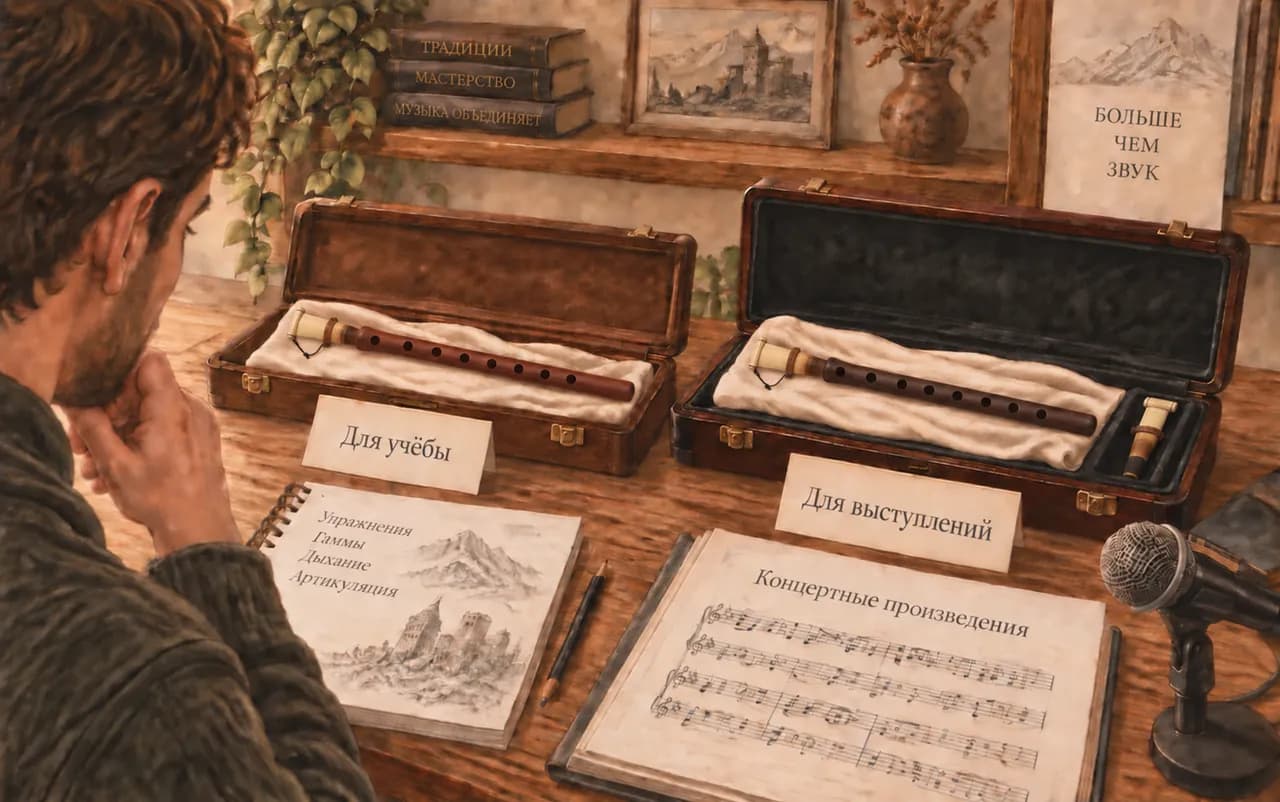
Product descriptions may call duduks “student”, “professional” or “concert” instruments. This can suggest that beginners should start with a lesser instrument and buy a good one later. At Dudukist, we do not recommend choosing by that ladder: quality matters from the first lesson, while a suitable reed can make playing more manageable.
The problem with the “student duduk” label
The label alone tells you nothing about how an instrument was made, tuned or tested. Be particularly cautious if a duduk is offered as something to “learn on first” even though it plays out of tune or responds poorly in an experienced player's hands. Those faults make learning harder, and a low price does not make them acceptable.
There is also a risk of buying a souvenir: a wooden object shaped like a duduk but unsuitable for proper lessons. Selling it as a beginner's musical instrument misleads the buyer. An attractive finish, carving or even apricot wood does not by itself establish that a duduk is playable.
Equally, a single word in a listing cannot establish the quality of a particular instrument. Products sold under similar labels may differ considerably. The instrument needs to be assessed together with its reed.
What “professional” and “concert” actually tell you
These descriptions need an explanation too. If a maker or seller calls a duduk a concert instrument, ask what distinguishes that particular example: its tone, response, selection process or playing checks. The name alone cannot guarantee a better sound or more accurate tuning.
Instruments made by skilled makers can differ in tone, key, comfort and price. Players choose according to their music. But beginners do not need to reach a particular level before using a good instrument: a well-made duduk can serve both learning and performance.
What you can make easier at the start: the reed
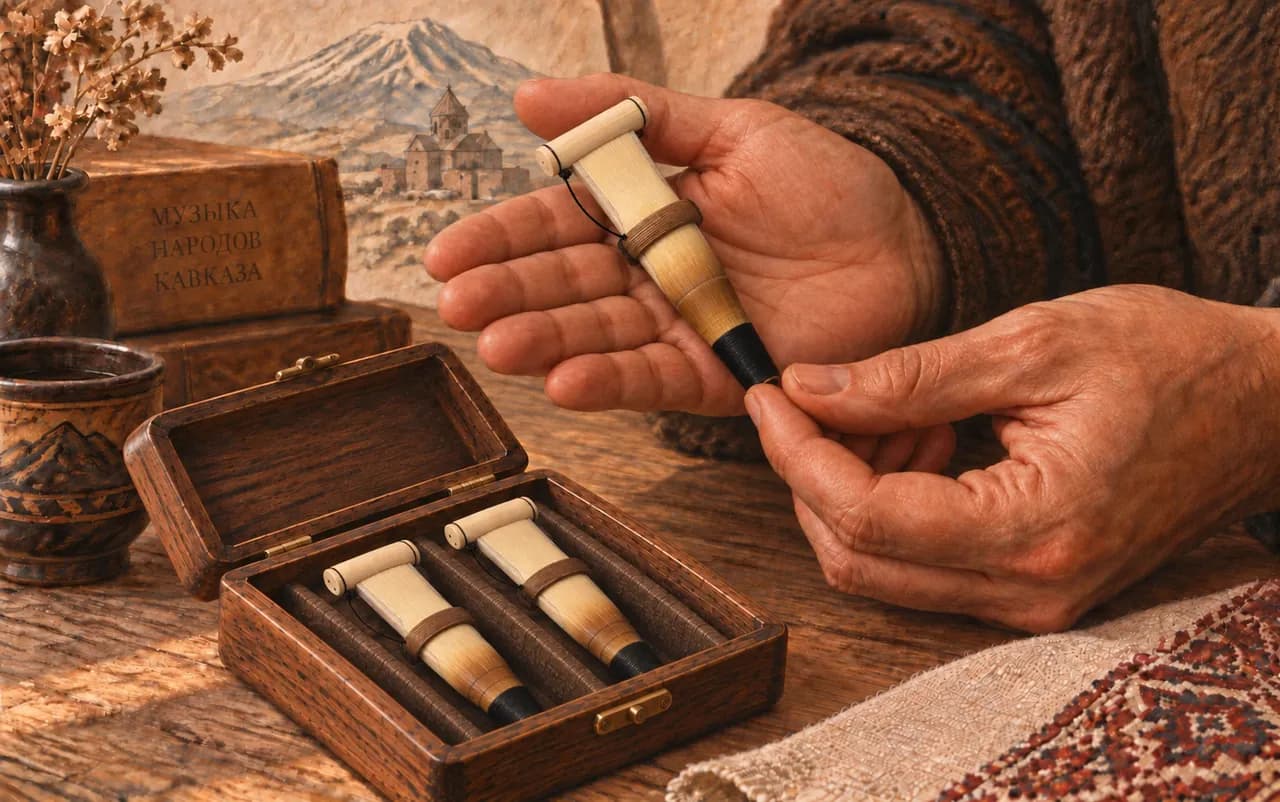
The reed is the removable part of the duduk that vibrates when air passes through it. Its resistance and response affect how easily you can start and sustain a note. A lighter, softer reed often suits a beginner; sometimes a medium reed is more comfortable. A teacher can help you choose one as your lips and the muscles involved in playing gradually adapt.
At Dudukist, we recommend a soft or medium reed for beginners — whichever makes learning your first notes comfortable with a teacher's guidance. Professional performers also use softer reeds. Reed strength should therefore not be treated as a scale of achievement: there is no need to move to a harder reed simply to reach the “next level”.
The reed must fit the particular duduk and be properly prepared. A light reed cannot fix a poorly made body, and an unsuitable reed can make even a good instrument difficult to play. If you cannot produce a sound, a teacher can check both the reed and your technique. A beginner's first attempt is not a reliable test of instrument quality.
How to check a duduk before buying
- Find out who made and tested it. A claim of skilled craftsmanship should come with clear information about the maker and how the instrument was prepared.
- Ask to hear the actual instrument. Individual sustained notes, a sequence of notes and a melody are useful. A general promotional video does not establish the quality of the duduk you will receive.
- Have a teacher or experienced player assess the setup. They can check tuning, response and the condition of the body and reed. Beginners may struggle to separate instrument problems from their own early difficulties.
- Discuss a reed for your first lessons. It should offer manageable resistance and suit the instrument. A working spare is useful too.
- Clarify the arrangements for checking and exchanging it. This matters especially when buying remotely: agree in advance what happens if your teacher identifies a problem.
At Dudukist, we recommend checking that your duduk is in good working order with a teacher before lessons begin. This lets you focus on music and develop your technique without struggling against faults in the instrument.
If your budget is limited
Start by discussing affordable instruments from skilled makers with your teacher. A checked second-hand duduk may be an option, as may borrowing an instrument for lessons if one is available. The body's condition and the suitability of the reed still need to be assessed.
A beginner needs a properly made, playable duduk and a suitable reed. Start with manageable exercises and resistance, rather than accepting a faulty instrument because it is labelled “student”.
Need help with an instrument? Open instrument selection and tell us about your experience, preferred key and requirements. Availability, included items and terms are clarified during the consultation.