The key is the first thing you choose when buying a duduk. It determines the size of the instrument, the character of the sound, and how comfortable it will be to play. Let's go through the main pitches in plain words.
What a duduk's key is
A duduk has no "universal" pitch: each instrument is tuned to its own root note. The lower the key, the larger the body, the wider the holes and the deeper, softer the voice. The higher the key, the more compact the instrument and the brighter, more vivid the sound.
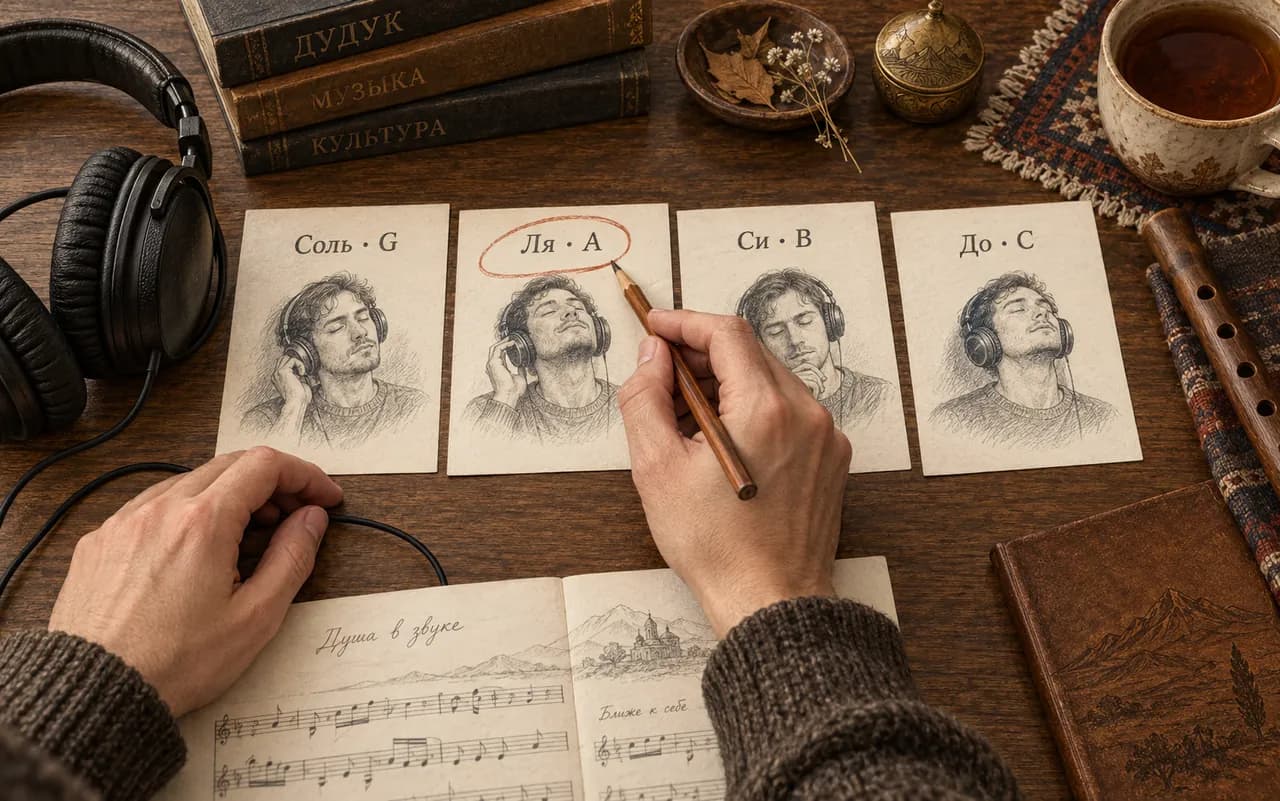
A — the golden mean
The most popular key. A warm, velvety and deep voice, which is considered "the" duduk sound. The most music and teaching materials are written for it.
Who it suits: almost everyone — from beginner to professional. If you're choosing a first duduk and unsure, go for A.
G — soft and low
Larger than the A instrument, with a lower and more enveloping timbre. The big holes and comfortable finger spacing often make the first steps easier.
Who it suits: those who love a deep, "chesty" sound, and many beginners.
B — bright and singing
More compact and brighter than A. It cuts through an ensemble well and is audible on stage.
Who it suits: ensemble playing and performances where you need a more focused, ringing voice.
C — high and noble
Higher and more compact still. A clean, clear tone that sounds beautiful in fast, virtuosic parts.
Who it suits: experienced players and those who need a bright upper register.
How to choose for your music
- Slow, soulful melodies — A or G.
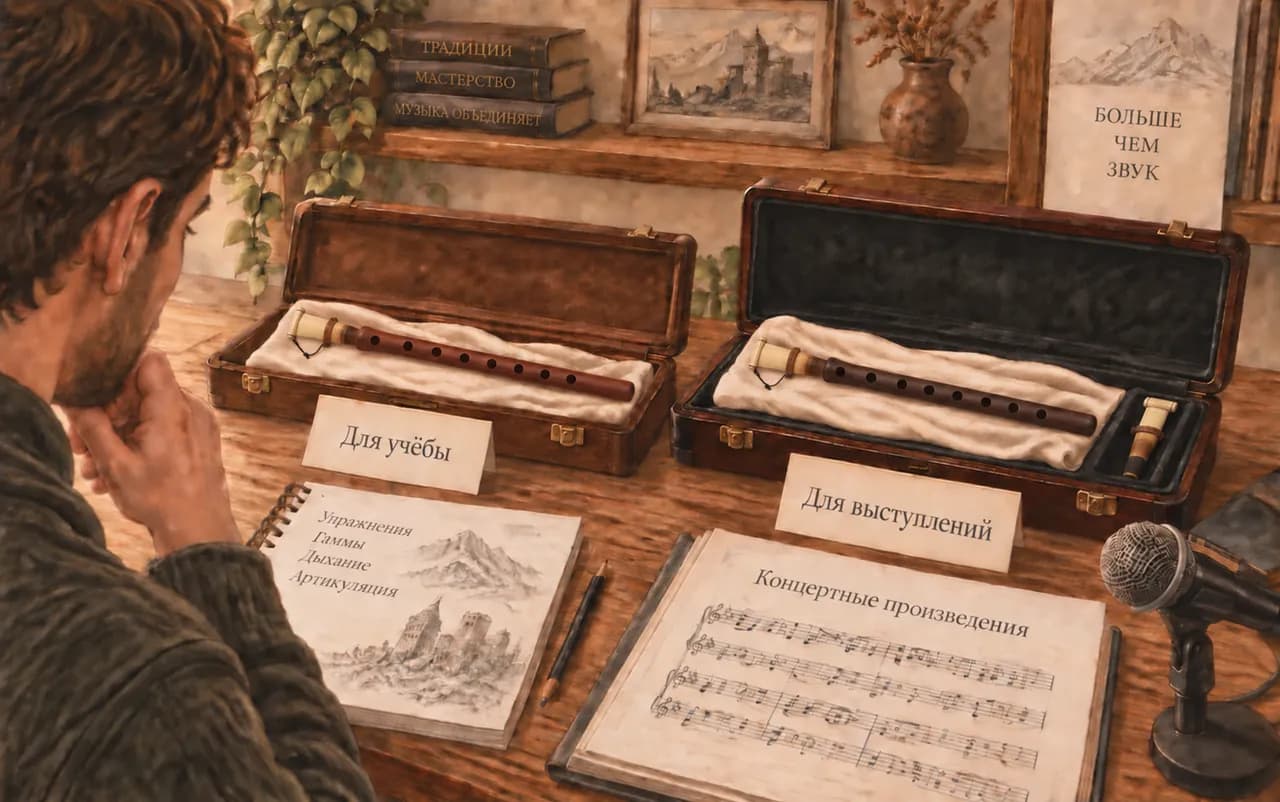
- Ensemble playing, the stage — B.
- Virtuosic, bright parts — C.
- A first instrument — A (universal) or G (easy to start on).
Many musicians eventually acquire several duduks in different keys for different repertoire — that's normal.
Need help with an instrument? Open instrument selection and tell us about your experience, preferred key and requirements. Availability, included items and terms are clarified during the consultation.