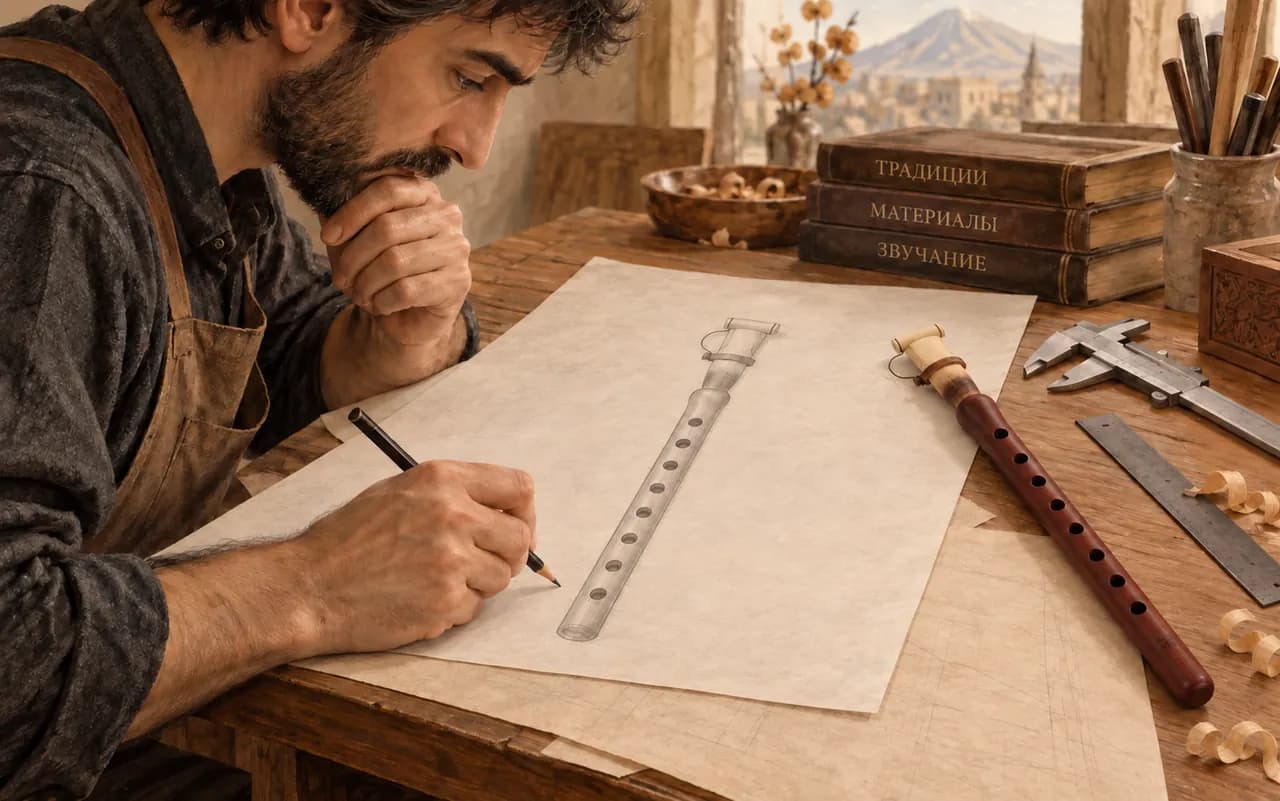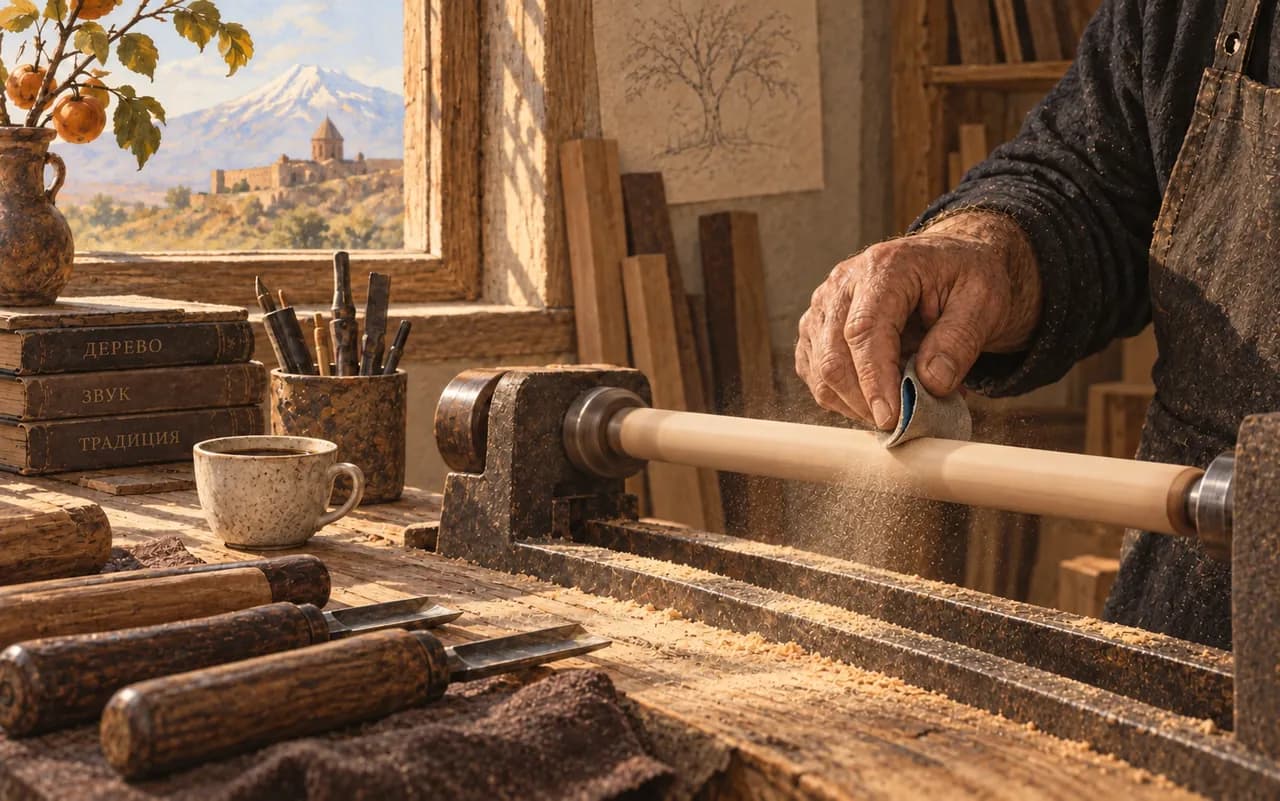
The day of varpet (master) Rubik begins with a cigarette in one hand and a cup of coffee in the other. He closes his eyes and mentally traces the contours of the future instrument — but only on days when inspiration visits him: "a duduk should be made only when you really want to, otherwise the instrument won't have a soul". After checking the finished instruments, the master moves on to work at the machines.
The master's path
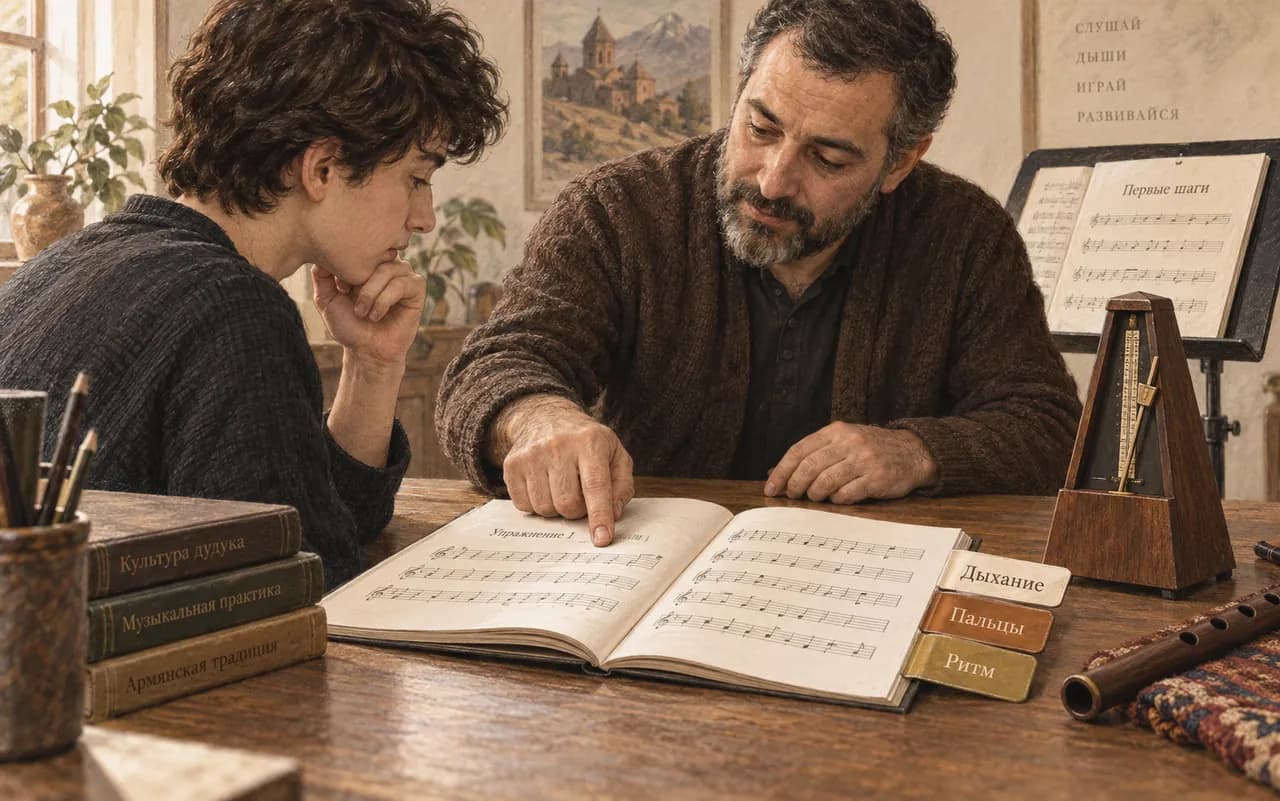
Varpet Rubik has been making duduks for 45 years and is self-taught. Fifty years ago a young lad herded cows on the outskirts of Yerevan and played a homemade pipe. The musician Avetikyan invited him to play at the House of Culture — there he became captivated by the duduk and decided to make instruments himself.
The master recalls that in the 1950s "only two people in all of Armenia made the pipe", while duduks were made at the doors of bazaars by incompetent people, and few could play them. Rubik made his first duduk from a solid piece of bamboo, but this material proved unsuitable because of its sensitivity to moisture.
About the instrument
The duduk consists of a tube (of wood) and a removable double reed of bamboo. The best duduk is made from a 50–60-year-old apricot tree. After felling, the logs are dried in the dark for 1–2 years, then blanks are cut, rounded on a lathe, holes are drilled, the head for the reed is prepared and the sound is adjusted.
The master pays particular attention to the reed — the "loudspeaker" of the sound: for it he uses a certain kind of bamboo. Rubik calls the duduk the only national Armenian instrument of indisputably Armenian origin, whose sound expresses "the soul of the Armenian people, its past, present and future".