Philosophy — the echo of life
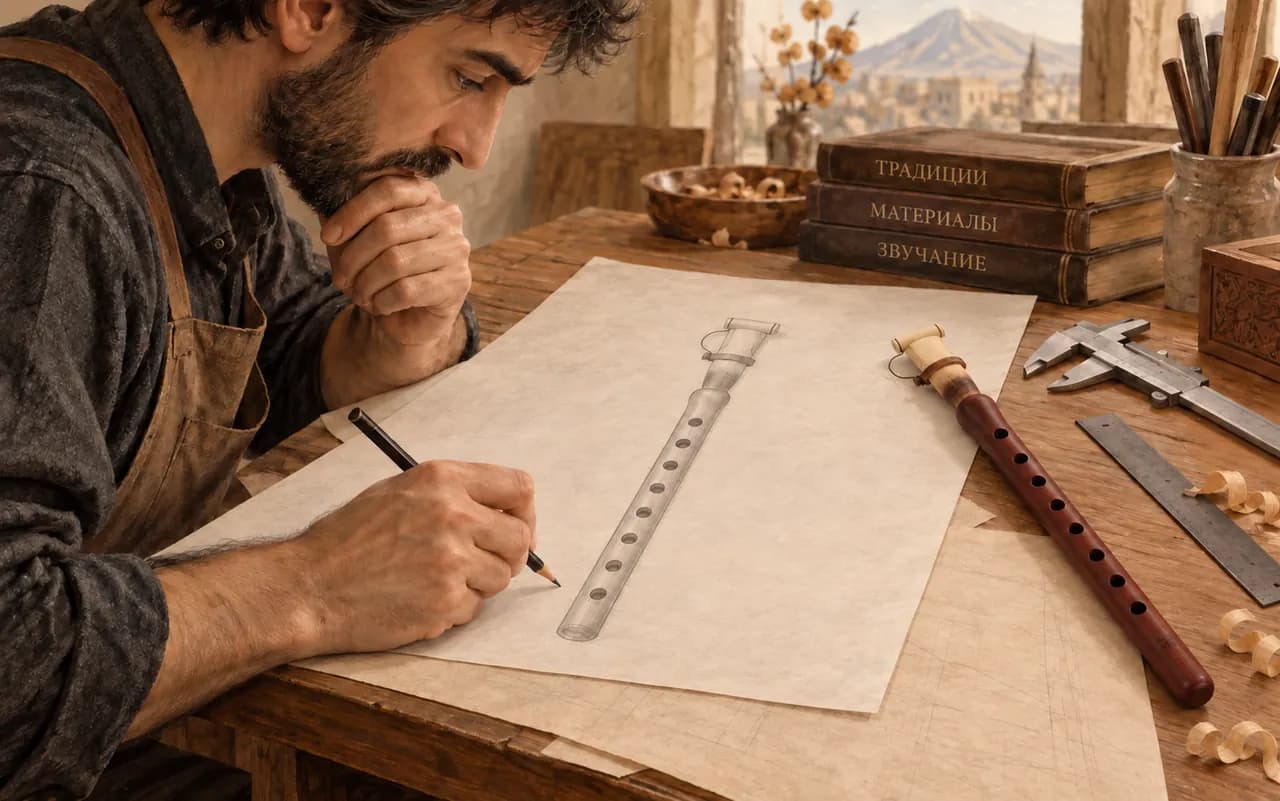
Man wished to become the equal of the gods, or even to rise above them. But for this he needed to create a unique instrument capable of outshining divine singing. And so he created the duduk.
The duduk is able to convey the sound of existence itself. Sound does not merely unfold in time — it unfolds the very essence of all living things: emotion.
Everything is subject to emotion, to mood. You cannot feel an emotion simply by wishing to. Philosophy without emotion is the dissection of wisdom, dead logic rather than living love, diagrams rather than painting. Just as a still life is considered the echo of a landscape, so death is the echo of life. Yet this echo has a development of its own, however reflected.
The duduk — a living echo of existence
The duduk is like a thread that can stretch any emotion to infinity — be it sorrow or joy. It can draw an emotion out of existence, making the moment endless.
The duduk is a living echo of existence, returned from death and knowing exactly why it has returned. The duduk tells us that we need not be afraid to look closely at ourselves, that we need not be shy or hold back our emotions.
The duduk is like a living philosophy — the flesh of dead wood that has managed to be resurrected. It is the fine line between life and death, the turning point of existence.
The duduk player balances on this border of life and death. He kills the ordinary and touches eternity — but he cannot preserve it, for he himself is mortal.
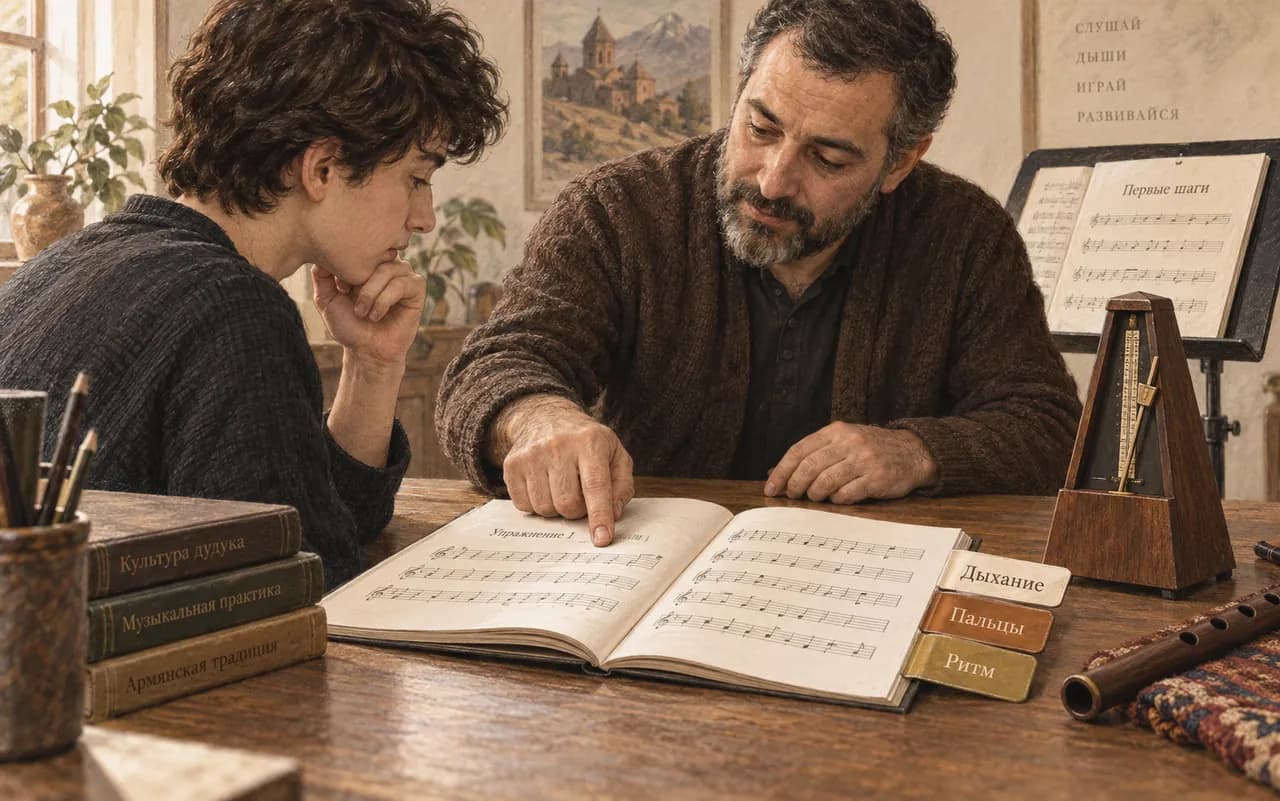
If you want to understand what kind of being a human is, it's enough to listen to the chants of the duduk. If you don't know how to begin a prayer, hear the duduk. If you want to hear God — play the duduk.